

Designing a Personal Website That Actually Converts ( First blog )
Learn how to design a personal website that communicates value clearly, builds trust, and converts visitors into clients or followers through structure, content, and visual clarity.
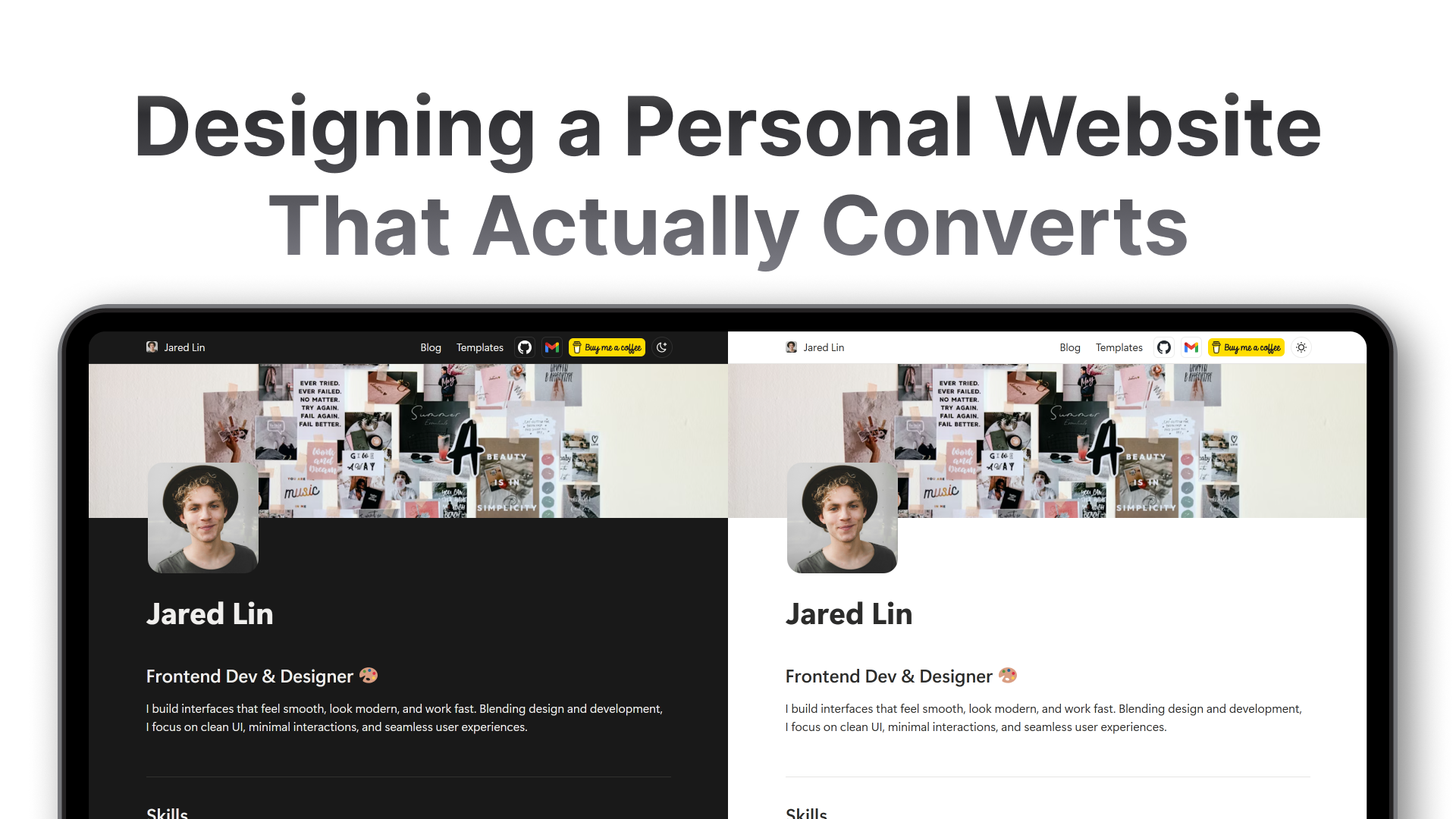


This is a demo blog post used to show how blog pages look in this portfolio template.
You can replace this content with your own blog.
A personal website is often the first impression someone has of your work. Whether you are a designer, developer, or independent creator, the structure and clarity of your site matters more than complex visuals or animations.
Start with a clear introduction. Visitors should immediately understand who you are, what you do, and who your work is for. This information should appear above the fold without forcing users to scroll or search.
Next, focus on content hierarchy. Headlines should guide the reader naturally from section to section. Avoid long blocks of text. Use spacing, subheadings, and short paragraphs to improve readability across all screen sizes.
Visual consistency also plays a major role. Limit your color palette, use one or two fonts, and maintain consistent spacing throughout the site. A clean layout builds trust and makes your work feel intentional.
Finally, add clear calls to action. Whether it is a contact link, a portfolio section, or a newsletter signup, guide visitors toward a next step without being aggressive or distracting.